Table of Contents
Watching your child struggle to read — guessing at words, dreading read-aloud time, falling behind classmates — is heartbreaking. But you are far from alone. Dyslexia affects 20% of the population, according to the Yale Center for Dyslexia and Creativity, and it represents 80–90% of all learning disabilities. The good news is that dyslexia responds remarkably well to the right instruction, and online dyslexia tutoring now brings specialist, evidence-based support directly into your home — no commute, no waiting list, no local shortage of experts.
This guide explains what the latest 2025–2026 research says about dyslexia, how online tutoring works, what it costs, how to choose a tutor, and answers the questions parents ask most — drawing on the Yale Center for Dyslexia and Creativity and current pricing and program details from leading online providers.
Understanding Dyslexia: What 2025–2026 Research Shows
Dyslexia is a neurological learning difference that makes accurate, fluent reading difficult — despite normal intelligence, good teaching, and plenty of effort. Yale defines it as “an unexpected difficulty in reading for an individual who has the intelligence to be a much better reader.” The difficulty sits in the brain’s phonological processing system: the part that connects letters to sounds. It is not a vision problem, not a sign of low intelligence, and not something a child outgrows. It is also not rare — and it is not a lack of trying.
The science is settled on one point: reading is not a skill children absorb by exposure. It must be taught explicitly — sound by sound, pattern by pattern. That is why structured literacy, built on the Orton-Gillingham method, is the evidence-based standard for dyslexia intervention. It teaches the structure of language directly, in a sequence that builds from simple to complex, and it works whether it is delivered in a classroom or over a video call.
- It is the most common neuro-cognitive disorder, according to Yale — more common than most parents realize.
- It is not caused by poor vision, low intelligence, or lack of effort, and it is not fixed by reading more of the same material.
- Dyslexia frequently co-occurs with attention difficulties, so a good evaluation screens for both rather than treating reading in isolation.
- It is lifelong but highly treatable: most children make substantial gains with structured, multisensory intervention.
- Early, targeted teaching changes the trajectory more than any other single factor — which is why waiting is the costliest choice a family can make.
That evidence base is exactly why online tutoring has grown so fast. A child no longer depends on whether a qualified dyslexia specialist happens to live nearby. The same structured, multisensory teaching that once required a clinic visit can now happen at the kitchen table — and the research on reading intervention says the method matters far more than the room it happens in.
Recognizing the Signs: When to Seek Help
Dyslexia looks different at different ages. Watch for these red flags:
- Preschool and kindergarten: late talking, trouble rhyming, difficulty learning letter names and sounds, and trouble following multi-step directions.
- Grades 1 to 3: slow, labored decoding; guessing words from the first letter; avoiding reading aloud; and spelling that lags far behind speaking ability.
- Grades 4 and up: reading well below grade level, strong listening comprehension but weak written work, and growing homework battles or school avoidance.
If several of these persist despite good classroom instruction, a formal evaluation by a school psychologist or a private educational psychologist can confirm dyslexia and unlock accommodations. You do not need a diagnosis to start tutoring, though — specialized help can begin right away, and many families pursue evaluation and tutoring in parallel.
How Online Dyslexia Tutoring Works
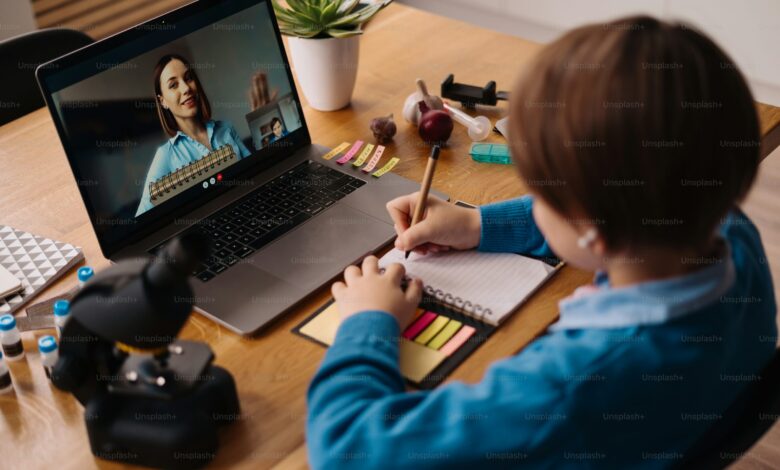
Effective dyslexia tutoring is not general homework help. It is structured literacy — explicit, systematic teaching of how sounds map to letters, how syllables combine, and how spelling patterns work. Sessions are live and one-on-one, usually 25 to 55 minutes, two to four times a week. The tutor and child meet by video, share a digital whiteboard, and work through decodable texts that match exactly the patterns the child has been taught.
A typical session follows a predictable rhythm: a quick review of yesterday’s patterns, a new concept taught with visual and hands-on tools, guided reading of decodable text, dictated spelling, and a short game or activity that practices the same skill. Because the lesson is diagnostic, the tutor adjusts in real time — slowing down when a pattern is shaky and moving on when it is secure.
- Orton-Gillingham-based methods — the gold-standard approach, teaching language structure through seeing, hearing, saying, and writing at the same time.
- Diagnostic teaching — every session adapts to the child’s responses in real time, so no time is wasted on skills already mastered or on gaps that were skipped.
- Phonics-first progression — from sounds to syllables to morphology, in a careful sequence that never asks a child to guess.
- Decodable practice — texts matched to the patterns the child has actually been taught, so reading feels like success rather than struggle.
- Assistive technology training — text-to-speech and speech-to-text tools that support schoolwork while reading skills catch up.
Parents are not shut out of the process. Most programs share session notes, progress dashboards, and recordings, and many include short daily practice games between sessions. Lexercise, for example, pairs live specialist sessions with personalized practice games and parent progress tracking, and it guarantees at least one grade level of reading improvement after eight weeks of its Professional Therapy program — or four extra weeks free.
Online vs In-Person Dyslexia Tutoring
The method is the same either way, so the choice comes down to logistics, the child’s temperament, and what is available where you live. Here is how the two formats compare.
| Factor | Online dyslexia tutoring | In-person tutoring |
|---|---|---|
| Scheduling | Flexible, including evenings and weekends | Limited by travel and tutor availability |
| Tutor choice | Access to certified specialists nationwide | Limited to local specialists |
| Session tools | Shared whiteboards, digital games, recorded sessions | Physical books, letter tiles, worksheets |
| Parent visibility | Dashboards, session notes, and recordings | Reports after sessions; less direct observation |
| Typical cost | Often lower; no travel overhead | Higher; travel time is often billed |
| Best for | Busy families, rural areas, specialist needs | Very young children who need hands-on guidance |
For most families, the deciding factor is the tutor, not the format. A certified specialist online beats a general tutor in person, because dyslexia responds to the method, not the room. The exception is very young children — under about seven — who sometimes focus better with a tutor physically present, though many still thrive online with a parent nearby.
If you are unsure, use the free trial most online programs offer. Dyslexia Connect offers a free trial session before any commitment, and several providers let a child try a session before a family signs up. A single trial session tells you more about fit than any brochure.
What Dyslexia Tutoring Costs in 2026
Specialist dyslexia tutoring costs more than general tutoring, and for good reason: certified training, diagnostic assessment, and individualized lesson planning take real expertise. Here is what families typically pay in 2026.
- Certified dyslexia specialist, 1-on-1 online: $40–$80 per hour.
- General reading tutor, 1-on-1 online: $25–$50 per hour.
- Marketplace tutors (Wyzant): $35–$60 per hour on average.
- Monthly programs (Dyslexia Connect): $255–$509 per month for one to two sessions a week; higher tiers run from $635 a month.
Most children need two to four sessions a week for six to twelve months to close significant gaps, so multiply the hourly rate by the schedule before you compare programs. A monthly plan can be cheaper than pay-as-you-go hourly tutoring for the same number of sessions, and many providers include a free evaluation, monthly progress updates, and no-contract billing in the price.
Before you rule a program out on price, ask about funding. Some families use education savings accounts or state ESA funds where available, some schools will fund or share the cost of an evaluation and intervention, and many programs offer free evaluations, trial sessions, and no-contract monthly billing. Dyslexia Connect includes a free evaluation with a written report and no contract on every plan; Lexercise prices its Professional Therapy at $495 a month.
Choosing the Right Online Dyslexia Tutor
The tutor matters more than the platform. Use this checklist when you compare providers:
- Certified training — look for Orton-Gillingham, Wilson Reading System, or Lindamood-Bell certification, not just a teaching degree.
- Diagnostic assessment first — a good tutor tests phonological processing, decoding, and fluency before teaching, then builds a plan from the results.
- Structured literacy only — beware programs promising quick fixes, or ones that rely on colored overlays, vision exercises, or brain training as the core method.
- Measurable goals — ask how progress is tracked (words correct per minute, decoding accuracy, reading level) and how often you will see a report.
- Trial session — your child’s rapport with the tutor predicts persistence, so use the free trial and watch how your child responds.
Also ask the practical questions: how are sessions scheduled and rescheduled, what happens if a session is missed, and what practice is expected between sessions. A provider that cannot answer these clearly is telling you something. And check the fine print on guarantees — Lexercise’s eight-week, one-grade-level guarantee is unusually specific, which is a good sign.
Red flags to walk away from: a tutor who cannot name the method they use, a program that guarantees a cure, and any provider that asks you to sign a long contract before a trial session. Dyslexia is treatable, not curable, and a trustworthy provider will say so.
Supporting the Whole Child
Dyslexia affects more than reading — it touches confidence, homework, and every subject that involves text. Children who struggle to read often start to believe they are not smart, and that belief can do more damage than the reading gap itself. The most effective support treats the child, not just the skill.
At home, protect reading confidence by reading aloud together, letting your child choose books they enjoy, and celebrating effort over speed. Keep homework sessions short and predictable, and talk with the teacher about accommodations such as extra time or audiobooks. For the broader picture, our guide to building a strong reading foundation explains the five pillars every reader needs, and our guide to maintaining academic excellence covers study systems that help older students keep up while their reading catches up.
Most important, keep the tone hopeful. Children with dyslexia are often creative, persistent problem-solvers — the same brain wiring that makes decoding hard can make big-picture thinking strong. Tutoring works best when a child believes the work will pay off, and that belief usually starts with the adults around them.
Frequently Asked Questions
Can dyslexia be cured?
Dyslexia is lifelong, but it is highly treatable. With structured, multisensory intervention, most children make substantial gains in reading accuracy and fluency, and many read at or near grade level. What does not change is the underlying wiring — which is why accommodations such as extra time can still help long after skills improve.
How is online dyslexia tutoring different from regular tutoring?
Regular tutoring reteaches classroom content. Dyslexia tutoring rebuilds the reading process itself, starting from sounds and letter patterns and working up to fluent reading. It uses a specific, evidence-based method — structured literacy — rather than homework help, and it is delivered by a specialist trained in that method.
How long does dyslexia tutoring take to work?
Most families see measurable progress within three to six months of consistent sessions, usually two to four a week. Lexercise guarantees at least one grade level of improvement after eight weeks of its Professional Therapy program. Closing a large gap typically takes six to twelve months, and progress is faster when a child practices a little between sessions.
Should my child be evaluated for dyslexia before starting tutoring?
No — specialized tutoring can start immediately, and you should not wait months for an evaluation to begin helping your child. Pursue the evaluation in parallel: a formal diagnosis unlocks school accommodations and an individualized education plan, and it helps the tutor target the exact weaknesses to work on.
Will my child still need accommodations after tutoring?
Often, yes — and that is fine. Tutoring builds skills; accommodations such as extra time, audiobooks, and text-to-speech remove barriers while skills catch up. Many students keep some accommodations through school even after their reading improves, and there is no penalty for using them.
Research Sources
Data in this guide comes from the Yale Center for Dyslexia and Creativity (Dyslexia FAQ), Lexercise (Professional Therapy program details and pricing), the PRIDE Reading Program parent guide to finding an online dyslexia tutor (July 2025), and Dyslexia Connect (program details and pricing). Prices were checked in November 2026 and may change; confirm current rates with the provider before enrolling. This guide is educational information, not medical or psychological advice; for a diagnosis or an individualized plan, consult a qualified professional.
Your child’s reading story is not finished — in many ways, with the right support, it is just beginning.