Industrial facilities rely heavily on efficient heat transfer systems to maintain productivity, safety, and energy balance. In this context, Heat exchanger maintenance tools play a vital role in keeping equipment clean, aligned, and operating at peak efficiency. Proper tools not only extend equipment life but also help technicians perform accurate servicing with minimal downtime. Understanding how specialized tools support maintenance activities allows plant managers and service teams to plan smarter and reduce unexpected failures.
Importance of Regular Equipment Care
Well-maintained heat exchangers deliver consistent thermal performance and help prevent system-wide inefficiencies. Regular servicing reduces fouling, corrosion, and mechanical wear that can disrupt operations. Understanding how specialized tools support maintenance activities allows plant managers and service teams to plan smarter and reduce unexpected failures.
- Improves overall heat transfer efficiency
- Reduces energy consumption and operating costs
- Helps avoid unplanned shutdowns and repairs
- Supports compliance with safety and quality standards
Consistent care ensures that minor issues are addressed before they escalate into costly breakdowns.
Role of Specialized Maintenance Equipment
General tools are often insufficient for precision-driven heat exchanger work. Purpose-built equipment enables technicians to handle complex tube and fin structures safely and accurately.
- Ensures controlled force application during servicing
- Allows access to confined or angled spaces
- Minimizes damage to tubes and surrounding components
- Enhances technician productivity and consistency
Using the right tools leads to repeatable results and reduces human error during maintenance procedures.
Precision Support in Tube Expansion Tasks
Tube expansion and rolling require accuracy, stability, and controlled torque. Tools designed for these tasks help maintain uniform contact between tubes and tube sheets.
- Maintains proper tube-to-sheet sealing
- Prevents over-expansion and material stress
- Supports long-term mechanical integrity
- Improves overall exchanger reliability
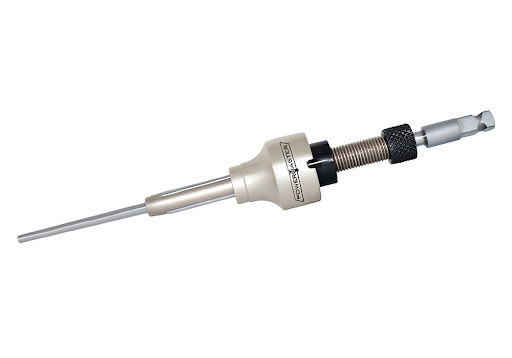
A right angle rolling drive becomes particularly valuable in tight layouts, enabling smooth operation without compromising alignment or safety.
Benefits of Ergonomic Tool Design
Maintenance activities typically involve tube cleaning, rolling, expansion, leak testing, and alignment checks. Each task requires specific accessories designed to deliver precision and repeatability. By matching the correct tool to each operation, teams can maintain optimal heat transfer performance and reduce the likelihood of premature failures that disrupt production schedules.
Maintenance work often involves repetitive motions and extended handling. Ergonomically designed tools reduce operator fatigue and improve work quality.
- Enhances comfort during prolonged use
- Improves grip and control in challenging positions
- Reduces strain-related injuries
- Supports consistent performance across shifts
Comfort and control directly influence accuracy, especially in detailed rolling and inspection tasks. Over time, consistent upkeep also protects capital investments by delaying costly replacements and unplanned outages.
Enhancing Safety and Efficiency on Site
Safety remains a top priority in industrial maintenance environments. Reliable tools contribute to safer workflows by offering predictable performance.
- Reduces risk of slippage or sudden torque release
- Provides stable operation in confined areas
- Supports compliance with workplace safety protocols
- Builds confidence among maintenance personnel
When tools function as expected, teams can focus on quality rather than risk management.
Long-Term Value for Industrial Operations
Investing in quality maintenance equipment delivers returns beyond immediate repairs. Over time, proper tooling reduces operational interruptions and extends asset lifespan.
- Lowers total cost of ownership
- Supports preventive maintenance strategies
- Improves planning and scheduling accuracy
- Enhances overall plant reliability metrics
These advantages make specialized tools a strategic asset rather than a routine expense.
Conclusion
Effective maintenance practices depend on informed tool selection and consistent procedures. By combining skilled technicians with dependable equipment, organizations can protect critical assets and sustain performance levels. Companies seeking proven solutions can explore the professional range offered by Powermaster America LLC, known for supporting industrial maintenance needs with reliable, field-tested tools. Partnering with an experienced supplier helps ensure maintenance teams are equipped for accuracy, safety, and long-term success.