How Much Really Does Water Damage Cost? A Data-Backed Guide to Protecting Your Home

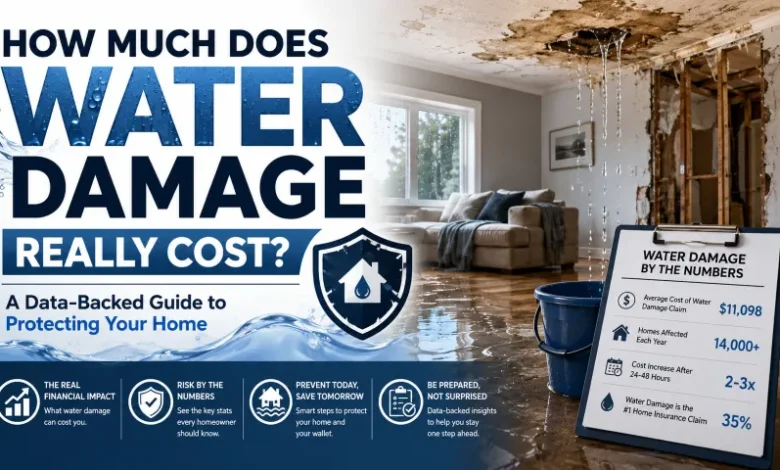
Table of Contents
Water damage doesn’t announce itself. It doesn’t feel urgent the way a fire or a storm does — until the day you pull up a corner of carpet and find black mold, or a ceiling stain finally gives way. By then, the bill has already grown far past what a simple repair would have cost. Here’s what the numbers actually say about water damage cost in the U.S. — and what you can do, this month, to make sure you’re not one of the statistics.
The Real Water Damage Cost, in Numbers
- Water damage and freezing are the second most common home insurance claim in the U.S., behind only wind and hail, accounting for roughly 22–28% of all homeowner claims in recent years.
- The average water damage claim now costs between $13,000 and $15,400, depending on the year and data source — and that’s just the average. Sewage backups into a finished basement can run $30,000 or more.
- Just one inch of water in a home can cause up to $25,000 in damage, according to FEMA and the National Flood Insurance Program — because water doesn’t stay where it lands. It wicks into drywall, subfloor, insulation, and framing before you ever see a stain.
- 98% of basements will experience some form of water intrusion during the life of the home. It’s less a question of “if” than “when” and “how bad.”
- Roughly 14,000 people in the U.S. deal with a water damage emergency at home or work every single day.
- Fewer than 20% of homeowners take any precautionary steps to protect against water damage before it happens — despite how common and expensive it is.
- Mold can begin growing in water-damaged materials within 24 to 48 hours, which is why speed matters more than almost anything else once water gets in.
The pattern in the data is consistent: water damage is common, it compounds quickly, and most people only address it after the damage is already done.
Where Water Actually Gets In
Most water damage cost doesn’t come from dramatic floods — it comes from slow, boring failure points that go unnoticed for months:
- Roof and flashing failures. Aging shingles, cracked flashing around chimneys and vents, and poor roof pitch let water seep into attics and walls long before a leak is visible indoors. Roof design matters here — for example, horizontal roof styles common on barns and outbuildings shed water differently than steep residential roofs, and getting that pitch and drainage wrong is a common source of hidden leaks in farm and outbuilding structures.
- Clogged gutters and poor grading. When water can’t move away from the foundation, it pools and eventually finds a way in through basement walls and slabs.
- Plumbing failures. Burst pipes, worn supply lines, and failing water heaters are responsible for a large share of claims — and a single hidden pipe leak can waste close to 10,000 gallons of water a year before anyone notices.
- Basement and foundation seepage. This is the slowest, most underestimated cause — and the reason nearly every basement eventually shows some sign of moisture.
Warning Signs You Can Catch Early
- Musty smell in a specific room or the basement, even without visible mold
- Peeling paint, bubbling drywall, or a soft spot in flooring
- A water bill that’s crept up 10% or more with no obvious explanation (a classic sign of a hidden leak)
- Dark staining around chimneys, skylights, or roof valleys
- Efflorescence — white, chalky mineral deposits on basement walls — which signals water has been moving through concrete
Any one of these on its own isn’t an emergency. Two or more together, especially after a heavy rain season, is worth a professional inspection before it becomes a five-figure claim.
Fixing It: DIY vs. Professional Waterproofing
Some prevention genuinely is DIY-friendly:
- Clean gutters twice a year and extend downspouts at least 5–6 feet from the foundation
- Re-caulk around windows, roof penetrations, and exterior joints annually
- Grade soil so it slopes away from the foundation
- Install a water leak sensor near water heaters, washing machines, and under sinks — inexpensive and often the earliest warning you’ll get
But structural waterproofing — sealing a foundation, correcting negative grading at scale, interior drainage systems, or sump pump installation — is not a weekend project. This is where professional assessment pays for itself, because the cost of doing it wrong (or not sealing it properly the first time) is exactly the $13,000+ average claim above. If you’re evaluating options locally, professional waterproofing services can assess foundation and basement risk before it turns into a claim, rather than after.
A Simple Rule of Thumb
Insurance data is consistent on one point: prevention costs a fraction of repair. A gutter cleaning or a resealed foundation joint costs hundreds of dollars. The average claim once water actually gets in costs 20 to 50 times that — before you factor in mold remediation, temporary housing, or the things insurance simply won’t cover, like gradual seepage damage that most standard policies exclude.
If your home hasn’t had a roof, gutter, and foundation check in the last two years, that’s the cheapest insurance you can buy — and it costs nothing but an afternoon.
Sources: Insurance Information Institute (Triple-I), FEMA/National Flood Insurance Program, ConsumerAffairs, This Old House, iPropertyManagement — data compiled from 2022–2025 industry claims reporting.