How DS200DSFB Boards Enhance Shunt Feedback Accuracy for Reliable Generator Protection

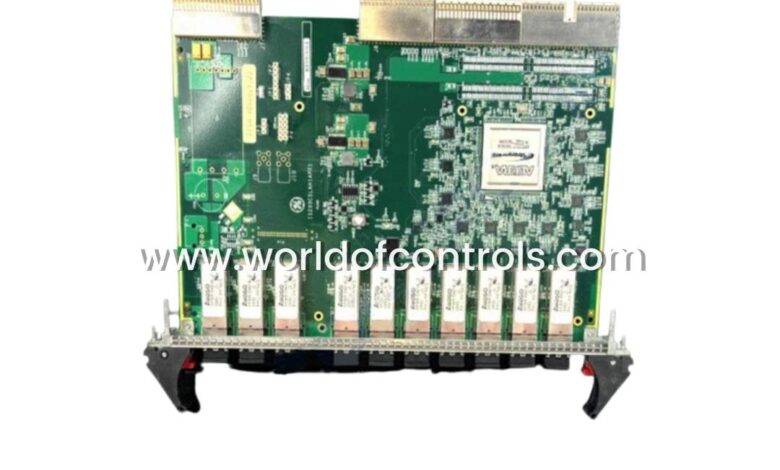
DS200DSFB Driver Shunt Feedback Boards serve as precision current monitoring modules in GE Mark V turbine control systems, delivering accurate field and armature current signals essential for generator protection. These boards process shunt resistor voltages through high-gain amplifiers and isolation circuits, enabling turbine controllers to execute overcurrent, loss-of-field, and overexcitation protection without false trips or delayed response. By achieving sub-0.1% measurement accuracy in noisy power plant environments, DS200DSFB boards significantly boost system reliability for utilities and industrial cogeneration plants.
Shunt Feedback Fundamentals
Shunt feedback systems convert generator field or stator currents into proportional DC voltages using low-value precision resistors (typically 50µΩ to 5mΩ). These analog signals feed into the turbine control’s protection algorithms, triggering SPEEDTRIP functions when currents exceed 150-200% rated values during faults or startups. Inaccurate feedback—caused by thermal drift, EMI pickup, or poor common-mode rejection—leads to either nuisance shutdowns or undetected rotor overheating that risks winding insulation failure. DS200DSFB boards eliminate these issues through specialized analog front-ends designed for Speedtronic rack environments.
Board Architecture and Signal Processing
The DS200DSFB integrates dual-channel shunt amplifiers, 16-bit sigma-delta A/D converters sampling at 10kHz, galvanic isolation transformers, and voltage-to-current driver outputs—all on a single Eurocard-format PCB with J1/J2 ribbon cable interfaces. Kelvin 4-wire sensing on shunt inputs compensates for lead resistance drops up to 100µΩ, while chopper-stabilized op-amps maintain 0.05% linearity across ±200A peak currents. Temperature compensation circuits (-40°C to 85°C operating range) ensure gain stability better than 50ppm/°C, critical for outdoor or combined-cycle plants.
Diagnostic features include per-channel LED status indicators, form-C alarm relays for open-shunt detection, and built-in self-test (BIST) routines that verify offset (<1mV) and gain (±0.2%) during power-up. TMR configurations (<R>/<S>/<T> cores) use majority-voting on digitized feedback to reject single-channel failures from EMI or component drift.
Advanced Precision Features
Dual-range scaling automatically switches between 50A/500A shunt ratings to handle generator startup surges (800% rated for 10s) without amplifier saturation. Active rectification on AC stator current inputs eliminates phase mismatch errors common in passive diode bridges, while multi-pole Bessel filters reject 50/60Hz harmonics and brush noise. Programmable current scaling via EPROM supports retrofit applications from 10MW frame-5s to 300MW H-class units. These features enable protection setpoints as tight as 105% continuous overexcitation versus 120% on legacy boards.
Common-mode voltage rejection exceeds 120dB up to 250V, preventing ground loops from VMEbus grounds or exciter cabinet frames from corrupting measurements. Isolated driver outputs (4-20mA) interface cleanly with EDMG exciter boards and <I/O> packs, supporting dynamic ceiling voltage tracking during grid faults.
Protection Logic Integration
DS200DSFB signals integrate directly into Mark V’s <C> processor SPEEDTRIP matrix, enabling coordinated protection with 21/41/51V/ANSI 50/51/27/32/40/46 elements. Redundant R/S/T channels vote on fault validity before latching trip outputs, achieving 50ms response while blocking transients from arc-flash or CT saturation. In multi-shaft plants, synchronized feedback across GT/ST generators optimizes islanding VAR control and black-start sequencing per NERC MOD-026 rules.
The board’s high sample rate captures sub-cycle fault inception, enabling distance relays to discriminate internal vs. external generator faults with 95% accuracy. Integration with HMI ToolboxST displays real-time waveforms, trend logs, and freeze-frame data for post-event analysis.
Reliability and Maintenance Benefits
Enhanced accuracy reduces nuisance trips by 40-60% while maintaining ANSI-grade fault clearing, extending MTBF beyond 50,000 hours. Hot-swappable design allows replacement during operation via rack pull-through, with auto-configuration preserving calibration data in non-volatile memory. Quarterly maintenance includes 4-wire shunt resistance checks (0.1% tolerance), amplifier DC offset calibration using precision sources, and continuity verification of isolation barriers (>1kV).
Infrared thermography detects hot driver transistors or solder cracks, while firmware updates via EPROM socket support Mark VIe compatibility. Predictive diagnostics trend gain drift and noise floor, triggering preemptive swaps before protection degradation.
Reliable Protection from Trusted Sources
For GE turbine operators seeking proven shunt feedback performance, the IS200DSFCG1A – Driver Shunt Feedback Board provides robust current sensing and driver signal integrity optimized for Mark V/VI excitation systems. Available through World of Controls, a premier supplier of industrial turbine control components, the IS200DSFCG1A ensures seamless integration, rapid delivery, and expert technical support to maintain your generator protection without compromising availability. Contact World of Controls for compatibility verification and replacement quotes.
Check Also – IS200CSLAH1A Compact PCI Serial Link Expansion Board
Read Also – Edge Computing in Healthcare: Transforming the Future of Digital Medicine