How Conversational Bots Boost Screening Accuracy in 2026

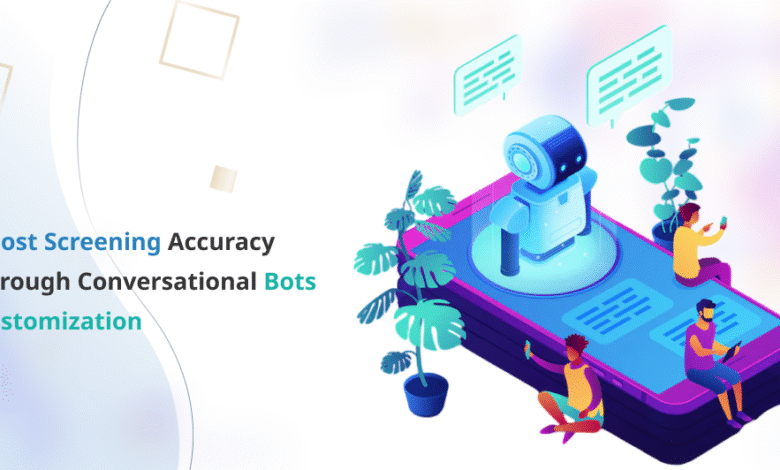
Table of Contents
What Are Conversational Bots for Screening?
A conversational bot is software that talks with a job candidate in natural language, through web chat, SMS, WhatsApp, email, or a voice call. In screening, it asks the first questions, checks eligibility, and collects structured data before a human recruiter spends time on the application. Modern bots use natural language processing, machine learning, and large language models to understand free-text answers, ask follow-up questions, and keep the conversation on track.
Resume screening alone misses context. A CV may list a skill without showing depth, availability, or motivation, so a bot verifies shift preferences, salary expectations, work authorization, language skills, and location in minutes, then writes the result into the applicant tracking system as a candidate record with a screening log. A rule-based bot follows a fixed script, while an AI agent changes its next question based on the last answer.
Why Screening Accuracy Matters More in 2026
Screening accuracy means the right people advance and the wrong people exit early, with reasons recorded. Every weak candidate who reaches an interview wastes a hiring manager’s time, and every strong candidate wrongly rejected is talent a competitor may hire. In high-volume hiring, small errors in the first filter multiply into a poor shortlist and a slow hiring funnel.
Adoption is now mainstream. SHRM’s 2025 Talent Trends report, cited by Pin, found that 43% of organizations use AI for HR tasks, up from 26% a year earlier. McKinsey research cited by AssessCandidates points to up to 40% improvement in hiring accuracy and performance when AI supports the process, and LinkedIn data cited by the same source says 67% of recruiters feel AI saves them time on screening. As recruitment software grows more capable, the teams that win pair it with clear screening criteria instead of simply automating a messy process.
Accuracy also protects fairness. A bot that asks every candidate the same standardized questions, applies the same structured scoring, and keeps an audit trail gives every applicant the same test. Human judgment still matters: a bot cannot read confidence or hesitation the way a person can, which is why understanding body language still helps interviewers judge the candidates the bot advances.
How Customization Improves Screening Accuracy
A generic bot asks generic questions and gets generic answers. Customization aligns the conversation with the role, the industry, and the hiring criteria, so the bot tests what actually predicts success in that job. The same principle applies to applications: what makes a standout CV is evidence matched to the role, not a long list of unrelated claims.
Role-Specific Dialogue Scripts
Custom scripts use the terminology and scenarios of the job. A candidate for a warehouse role hears questions about safety, lifting, and shift rotations, while a candidate for a DevOps career hears about deployment, monitoring, and incident response. Role-specific scripts reduce false positives, because the bot tests real competency instead of general chat ability.
Adaptive Question Flow
Adaptive questioning changes the next question based on the last answer. If a candidate says they have two years of experience, the bot probes depth with a follow-up about the hardest problem they solved. If an answer is vague, it asks for an example. This conditional flow separates candidates who memorized keywords from those who did the work, and it cuts both false positives and false negatives.
Real-Time Sentiment Analysis
Sentiment analysis reads tone, pace, and word choice during a voice or text conversation and produces a sentiment score for the interaction. A frustrated candidate can be routed to a human recruiter, while a highly engaged one can be moved forward faster. Used carefully, this is an engagement signal, not a verdict: sentiment is not a lie detector, and no hiring decision should rest on a single score.
Custom Branding in AI Scripts
Branded messages, a consistent tone of voice, and a clear statement of what happens next build candidate trust. When the bot sounds like the employer, candidates treat the conversation as a real step in the process rather than a spam filter. That first impression matters as much as the welcome in client onboarding, and it shows up directly in completion rates and satisfaction scores.
AI Voice Calls After the Resume Lands
Voice screening is where conversational bots have changed fastest. With speech recognition and text-to-speech built in, an AI voice agent can call a candidate within minutes of an application, hold a short structured conversation, and score the answers against the same scorecard a recruiter would use. For hourly and frontline hiring, where candidates apply from a phone and may never open email, a call reaches people a chat window cannot.
Instant Outreach With AI Call Assistants
Speed is the simplest advantage. A bot answers after-hours applicants, responds in seconds rather than days, and keeps the talent pipeline warm while recruiters sleep. Airbus’s assistant Bessie, described by AssessCandidates, handled more than 12,000 interactions a month, with 60% arriving after hours, and answered 74% of them. Teams can also pair voice with SMS messages for reminders and scheduling.
Standardized Screening for Fairness
Every candidate hears the same questions in the same tone, and every answer is scored against the same criteria. That standardization is the fairest part of the system, and it creates an audit trail a hiring team can review if a decision is challenged. Human review stays essential: a recruiter should check borderline cases, not let the bot reject a candidate on a single misunderstood answer.
Efficient Data Collection and Storage
Voice AI systems log call transcripts, structure the answers, and store them in the ATS for quick retrieval. Recruiters can search responses, compare candidates side by side, and spot trends across a whole campaign, such as a question that confuses applicants. Structured data also feeds hiring analytics: completion rate, pass rate, and drop-off analysis become measurable instead of anecdotal.
Improved Follow-Up and Feedback
After the call, the bot can give instant next steps, book an interview on the hiring manager’s calendar, or explain a rejection kindly. Fast feedback is one of the strongest drivers of candidate satisfaction, and it reduces the silent drop-off that happens when applicants hear nothing for a week. Once a candidate is hired, HR and payroll software takes over the employment record, but the tone set during screening shapes the new hire’s first impression.
Voice screening works best as a filter, not a final judge. It clears the routine checks quickly so that human interviews focus on judgment, motivation, and fit, which are the questions a bot is least qualified to answer.
What the 2026 Numbers Say About Chatbot Screening
Vendor claims vary widely, so treat the figures below as reported results from named sources, not guarantees for any single deployment. The pattern across sources is consistent: bots cut time and admin work, and the largest gains appear in high-volume hiring, where the same questions repeat hundreds of times a month.
Grand View Research, cited by Pin, puts the chatbot market at $9.56 billion in 2025, projected to reach $41.2 billion by 2030, and AssessCandidates reports that 38% of recruitment processes already use AI chatbots. SHRM data cited by Pin adds that 88% of HR professionals using AI report time savings or higher efficiency, although saving time does not by itself prove better hiring decisions.
| Result | Figure reported | Source |
|---|---|---|
| Early candidate enquiries handled by bots | Up to 90% | 2025 HR tech report, via AssessCandidates |
| Screening cycle speed | 30–50% faster | Automation benchmarks, via AssessCandidates |
| Time to hire | Up to 30% lower | AssessCandidates |
| L’Oréal Mya assistant | 40 minutes less per applicant; $250,000 saved | AssessCandidates |
| Unilever graduate hiring | 4 months to 4 weeks; 70% fewer human interviews | AssessCandidates |
| Chipotle, application to start date | 12 days to 4 days | Workday customer story, via Pin |
The Unilever case shows what the time saving can mean. Cutting a hiring cycle from about four months to about four weeks is roughly a 75% reduction in time (my own calculation from the figures AssessCandidates reports), alongside 50,000+ hours saved. Those are vendor-reported case studies, so a team should test the same measures on its own pilot before expecting the same result.
SmartRecruiters reports similar vendor-side gains for its Winston assistant, including doubled candidate conversion, while Metaview’s 2026 guide stresses a different lesson: the best teams use bots to gather evidence for a decision rather than to reject candidates faster, and they keep the evaluation consistent even when conversations adapt to each applicant.
Choosing the Right Bot for Your Hiring Volume
Match the tool to the problem. Pin’s 2026 comparison draws a useful line between chatbot-only tools, which wait for inbound applicants, and full AI recruiting platforms, which also source and contact new candidates. A team with strong inbound volume needs screening depth; a team struggling to find candidates needs sourcing as well. High-volume hiring, such as a hotel hiring more staff for a new season, benefits most from automation, because the same screening conversation repeats at scale.
Pricing is opaque across most vendors, and Pin’s October 2026 re-check found rates running from a free tier to roughly $98,000 a year for a median enterprise contract. The table below uses the price signals Pin published, with third-party estimates marked as estimates, so a buyer can see the shape of the market before requesting a quote.
| Platform type | Best for | Price signal (Pin, Oct 2026) |
|---|---|---|
| Pin, full AI recruiting platform | In-house teams and agencies | From $99 a month, free tier available |
| Paradox (Olivia), conversational AI | High-volume frontline hiring | About $1,000 a month, estimated |
| XOR, AI recruiting chatbot | Hourly and blue-collar hiring | About $500 per hire, vendor claim |
| HireVue, video and chatbot | Enterprise assessment | About $35,000 a year |
| Phenom, talent experience platform | Large enterprises, 5,000+ staff | About $98,000 a year, median |
Judge any vendor on the same seven capabilities Pin lists: channel coverage, screening depth, scheduling automation, language support, ATS integration, analytics and customization, and data security. Ask for SOC 2 certification, encryption, and documented access controls, and ask how the bot handles an unexpected question, because fallback responses reveal the quality of the conversation design.
For high-stakes roles, keep a human in the loop. Many of the highest-paying careers depend on judgment that a screening score cannot capture, so use the bot to shortlist and the interview to decide. A pilot on one role, measured against a control group screened by humans, gives a cleaner answer than any vendor demo.
Risks, Bias, and Data Rules You Cannot Ignore
Bias is the first risk. A bot trained on past hiring data can repeat past patterns, screening out candidates who do not resemble previous hires. Guard against that with validation on real outcomes, regular audits for disparate impact, and structured scoring that is documented and explainable. SHRM data cited by AssessCandidates found that 32% of candidates feel misunderstood by AI, a warning that a bot’s confidence does not equal accuracy.
Data protection is the second risk. In June 2025, a misconfigured admin account at a chatbot provider exposed 64 million applicant records, according to Krebs on Security as reported by Pin, and the issue has since been patched. The lesson is permanent: check SOC 2 status, limit data retention, encrypt candidate data, and get candidate consent before recording or transcribing a conversation. Rules differ by jurisdiction, and this article is general information, not legal advice, so check employment law and privacy rules such as GDPR and CCPA with a qualified adviser before launch.
Fraud and overreach are the third risk. Bots face duplicate applications, identity questions, and interview fraud, so add identity verification and background checks where the role requires them, and never let a bot make a final hiring decision alone. Gartner’s October 2025 HR AI survey, cited by Pin, found that 88% of HR leaders say their organizations have not yet realized significant business value from AI, a reminder that a narrow tool can leave the rest of the hiring workflow untouched.
A 30-Day Plan to Launch Custom Screening Bots
Do not roll a bot out to every role at once. A 30-day pilot on one high-volume role gives real evidence about accuracy, completion rates, and candidate satisfaction, and it limits the damage if the first scripts miss the mark. Pick a role with clear minimum qualifications, because a bot can only screen well when the criteria are written down, and name one recruiter who owns the questions, one hiring manager who owns the scorecard, and one person who watches the transcripts daily.
- Week 1: choose the pilot role, write 8 to 12 screening questions, define knockout questions, and agree on the pass mark with the hiring manager.
- Week 2: build the dialogue flow, connect the ATS and calendar, set escalation rules, and test the bot with staff acting as candidates.
- Week 3: soft-launch to real applicants, review transcripts daily, fix fallback responses, and adjust any question that confuses candidates.
- Week 4: compare completion rate, pass rate, time to hire, and candidate satisfaction against the human-screened baseline, then decide whether to expand.
Measure quality of hire, not just speed. A bot that fills roles faster but sends weaker candidates to interviews has failed, even if time to hire falls. Track new hire performance and early retention for the pilot group before scaling the program.
If accuracy does not improve, change the questions before changing the vendor. Most screening failures come from vague criteria, missing knockout questions, or a scorecard nobody agreed on, and a new platform will inherit the same flaws if those are not fixed first.
Frequently Asked Questions About Conversational Bots
What is a conversational bot in recruitment?
A conversational bot in recruitment is software that talks with candidates by chat or voice, answers FAQs, asks screening questions, and books interviews. It writes structured results into the ATS so recruiters can review a shortlist instead of reading every application by hand.
Can conversational bots replace recruiters?
No. Bots handle the repetitive first filter, scheduling, and follow-up, while recruiters handle judgment, motivation, and final decisions. The time savings come from automating routine steps, not from removing human judgment from hiring.
How much do recruitment chatbots cost in 2026?
Pricing runs from free tiers to roughly $98,000 a year for a median enterprise contract, according to Pin’s October 2026 re-check. Small teams can start near $99 a month, while enterprise platforms typically run from about $35,000 a year upward, and most vendors require a sales call for an exact quote.
Do conversational bots reduce hiring bias?
They can reduce inconsistency, because every candidate gets the same questions and the same structured scoring, but they can also repeat bias in their training data. Bias reduction needs validation, regular audits for disparate impact, and human review of borderline cases.
Are conversational bots safe with candidate data?
Safety depends on the vendor. Look for SOC 2 Type 2 certification, encryption at rest and in transit, documented access controls, and clear data retention limits, and get candidate consent before recording calls. The June 2025 exposure of 64 million applicant records at one provider shows why security checks belong in every vendor evaluation.
Research Sources
- AssessCandidates – How AI Chatbots Are Transforming Recruitment in 2026, February 9, 2026.
- Metaview – Conversational AI for recruiting: from chatbots to AI agents, September 16, 2026.
- Pin – Recruitment Chatbots: 9 Best Platforms Compared for 2026, updated October 22, 2026.
SmartRecruiters and XOR were also opened for comparison while researching this article. Figures are reported as published by the sources named; vendor case-study results are vendor-reported and should be tested on a pilot before they are treated as expected results.