A Practical Guide to Guest Posting for Independent Websites

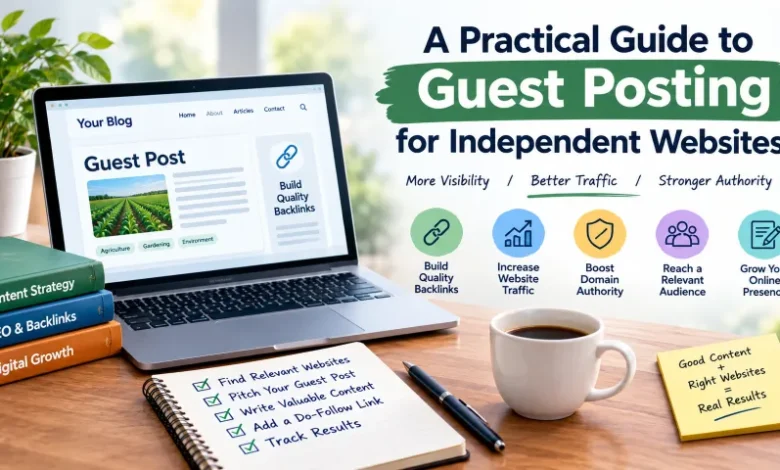
Independent websites often cover several worlds at once. A publication might move from education to entertainment, then offer readers a guide to a subject outside either category. That variety can be a strength, but it makes consistency important: readers need to know what the site stands for, and each new article should give them a clear reason to stay.
One way to expand a publication’s reach is to work with contributors from other websites. A thoughtful guest article can introduce a fresh perspective, answer a reader question, or bring a new audience to a topic. The value depends less on how many posts appear than on whether each one fits the publication and serves its readers.
Start with the reader, not the placement
Before inviting contributors or exploring ways to purchase guest posts, define the gap the article should fill. Is there a topic your readers ask about that your regular team has not covered? Would a specialist add useful experience to a subject such as online learning, independent films, digital creativity, or career development? A specific answer helps you judge pitches and avoid publishing material simply because it is available.
Review your recent articles and note what is missing. A site with several introductory explainers may benefit from a practical checklist or a first-person account. A publication that already has many opinion pieces might need a carefully sourced guide. Keep the intended reader in view: a beginner and an experienced professional may both be interested in the same subject, but they need different levels of detail.
Set editorial standards before accepting work
Clear expectations protect both the website and the contributor. Provide a short brief covering the intended audience, the article’s purpose, approximate length, tone, and any subjects that are out of bounds. Explain how you handle factual claims, quotations, images, and edits. These guidelines need not make every piece sound alike; they help contributors understand the publication’s basic standards.
Assess a proposed article for more than its headline or topic. Ask whether it offers an original angle, whether its claims can be checked, and whether its advice is specific enough to act on. For education-related content, accuracy and context matter especially: explain who a recommendation suits and avoid presenting one learning method as right for everyone. For entertainment coverage, distinguish informed interpretation from verifiable facts, and make sure readers can tell the difference.
It is also worth checking whether the piece duplicates something already on your site. Two articles can address the same broad subject if they answer different questions, but publishing near-identical material creates a weaker experience. A quick search of your own archive can reveal opportunities to link related coverage within the article without sending readers in circles.
Make the contributor process manageable
A simple workflow prevents small misunderstandings from becoming delays. Confirm the pitch before a full draft is written, agree on a deadline, and name one person who will collect edits. When reviewing a draft, separate essential corrections—such as an unsupported claim or a confusing explanation—from personal preferences about phrasing. Give feedback in a single, organised pass where possible.
Some publishers also hire freelance help for editing, illustrations, research, or production tasks. A marketplace such as Osdire gives buyers and freelancers a place to arrange services across more than 900 categories, including writing and translation, design, programming, video, audio, photography, and marketing. Its flat pricing and held payment, released after the buyer approves delivered work, can make the terms of an order easier to understand. As with any hiring process, review the service details and agree on deliverables before work begins.
Whether you hire a writer directly or work with an outside contributor, retain editorial control. The publication is responsible for what it publishes. Check names, dates, statistics, and quoted material; ask for clarification when a point is vague; and make sure any commercial relationship or relevant interest is handled in line with your own editorial policy.
Measure usefulness, not just reach
After publication, look beyond the initial traffic spike. Did readers spend time with the article? Did they move to another useful page, save it, or return later? Did the piece prompt thoughtful questions or reveal a subject worth covering in more depth? These signals offer context that a raw view count cannot provide on its own.
Give new articles time to find their audience, and compare them with similar pieces rather than treating every topic as interchangeable. A practical education guide may attract steady search visits, while an entertainment feature may generate a shorter burst of attention. Both can be worthwhile if they meet the publication’s goals and satisfy readers.
A strong independent website grows through deliberate choices: useful subjects, trustworthy reporting, clear standards, and a process that respects contributors’ time. Outside voices and freelance support can help broaden what a small team produces, but they work best when guided by a clear editorial purpose. The result is not simply more content; it is a publication readers can recognize and rely on.
Frequently Asked Questions
How many guest posts should a small site publish per month?
There’s no fixed number that works for every site. What matters more is fit: a handful of well-matched, carefully edited guest articles will usually do more for a publication than a high volume of loosely related ones. Start with quality thresholds, not a quota, and let the number grow naturally as good pitches come in.
Should every guest contributor be paid?
Practices vary across publications. Some pay a flat fee, some offer a byline and backlink in exchange for content, and some do both depending on the contributor’s experience and the piece’s value. Whatever you decide, be upfront about it before the contributor starts writing — ambiguity here is one of the most common sources of friction.
How do you know if a guest post is actually helping SEO, and not just filling space?
Look past the initial traffic bump. Check whether the page keeps getting organic search visits weeks or months later, whether it earns backlinks from other sites, and whether it ranks for terms your readers actually search. A guest post that spikes once and disappears from search results usually isn’t adding lasting value.
What’s the difference between accepting free contributions and paying to purchase guest posts?
Accepting pitches means contributors come to you, often for exposure or a link back to their own site. Purchasing guest posts usually means paying a fee for placement, sometimes through a service that connects publishers with writers or advertisers. Either approach can work, but the same editorial standards should apply regardless of which path a piece came through — readers don’t care how an article got published, only whether it’s worth reading.
How should a publication disclose sponsored or paid guest content?
Clearly and consistently. Most publications use a short note at the top or bottom of the article — something like “sponsored content” or “this post includes a paid placement” — so readers know exactly what they’re looking at. Being upfront about this tends to build more trust with an audience than it costs.
A strong independent website grows through deliberate choices: useful subjects, trustworthy reporting, clear standards, and a process that respects contributors’ time. Outside voices and freelance support can help broaden what a small team produces, but they work best when guided by a clear editorial purpose. The result is not simply more content; it is a publication readers can recognize and rely on.
Also check out our Write for Us Page. There are also guest contributor guidelines here.